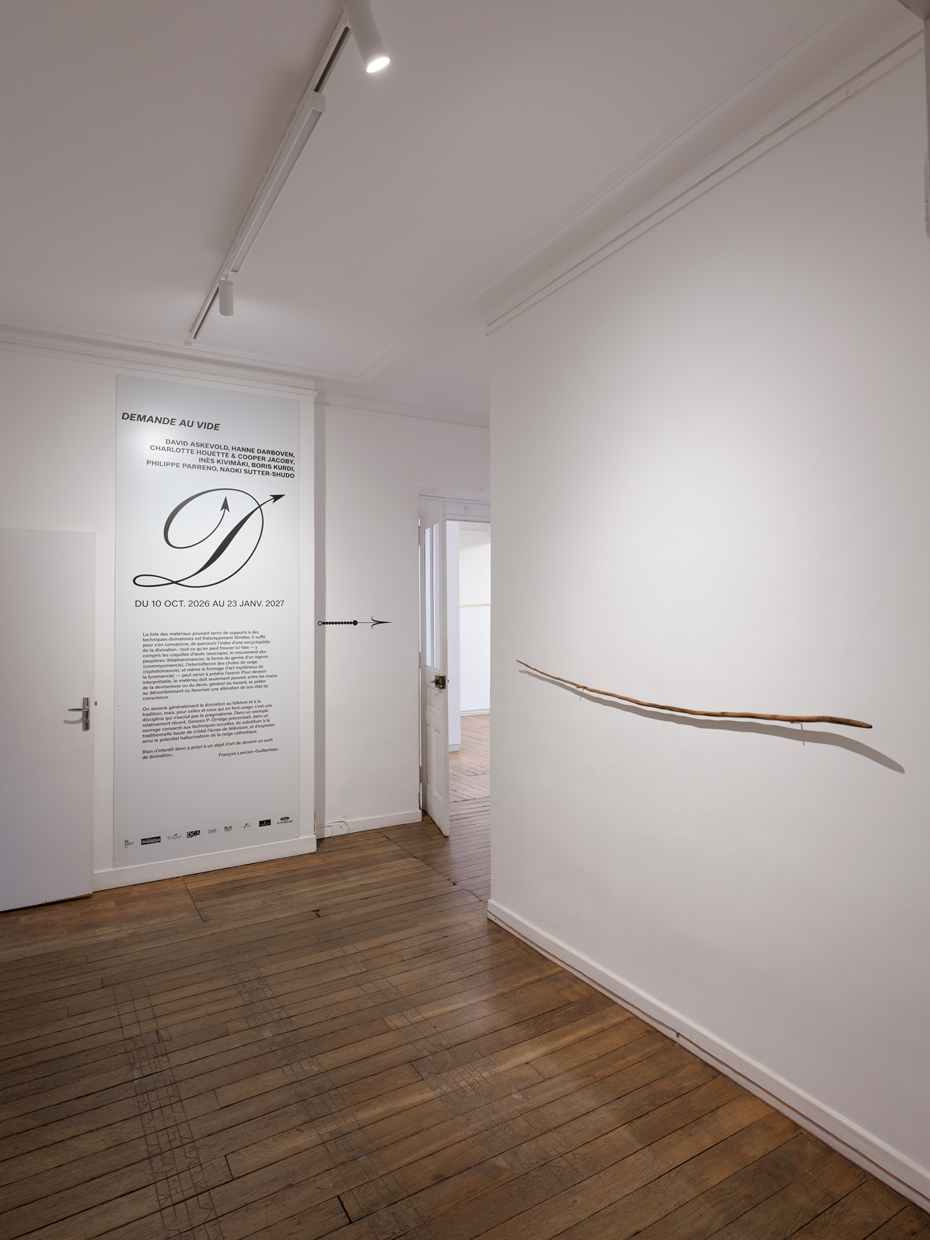
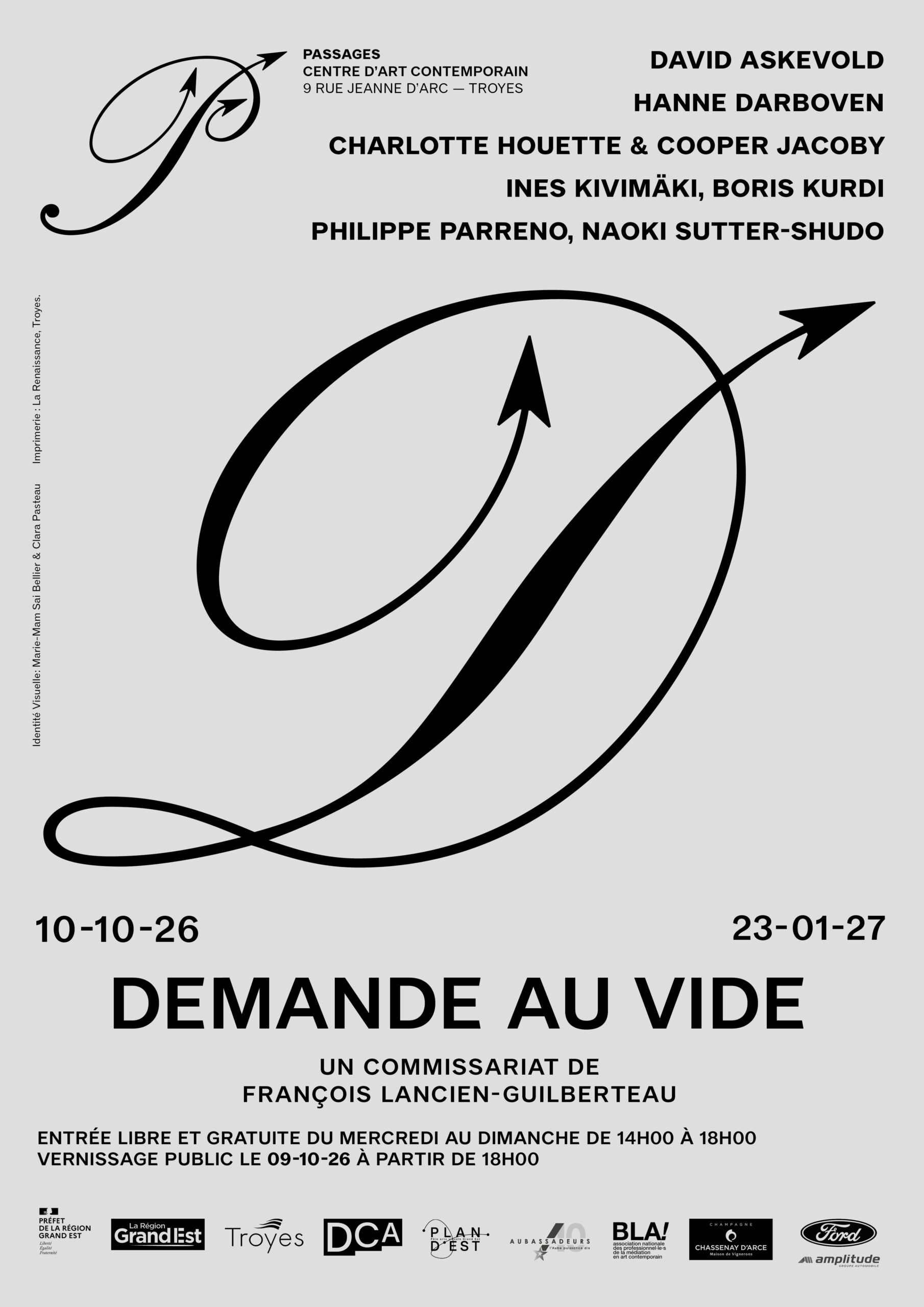
WITH: David Askevold, Hanne Darboven, Charlotte Houette & Cooper Jacoby, Ines Kivimäki, Boris Kurdi, Philippe Parreno, Naoki Sutter-Shudo
The range of materials that can serve as vehicles for divinatory techniques is theoretically limitless. To be convinced of this, one need only browse the index of an encyclopaedia of divination: anything found in this world—including eggshells (oomancy), the movement of the eyelids (blepharomancy), the shape of an onion sprout (cromniomancy), the intervals between snowfalls (niphetomancy), and even cheese (the mysterious art of tyromancy)—can be used to predict the future. To become interpretable, a material need only be capable, in the hands of a diviner, of generating chance, lending itself to enumeration, or inducing an altered state of consciousness.
Divination is generally associated with folklore and tradition, but for those who practise it, it is a discipline by no means incompatible with pragmatism. In a relatively recent example, Genesis P-Orridge recommended, in a book devoted to occult techniques, replacing the traditional crystal ball with a television screen, thereby harnessing the hallucinatory potential of cathode-ray static.
There is nothing, then, to prevent an art object from becoming a divinatory tool.
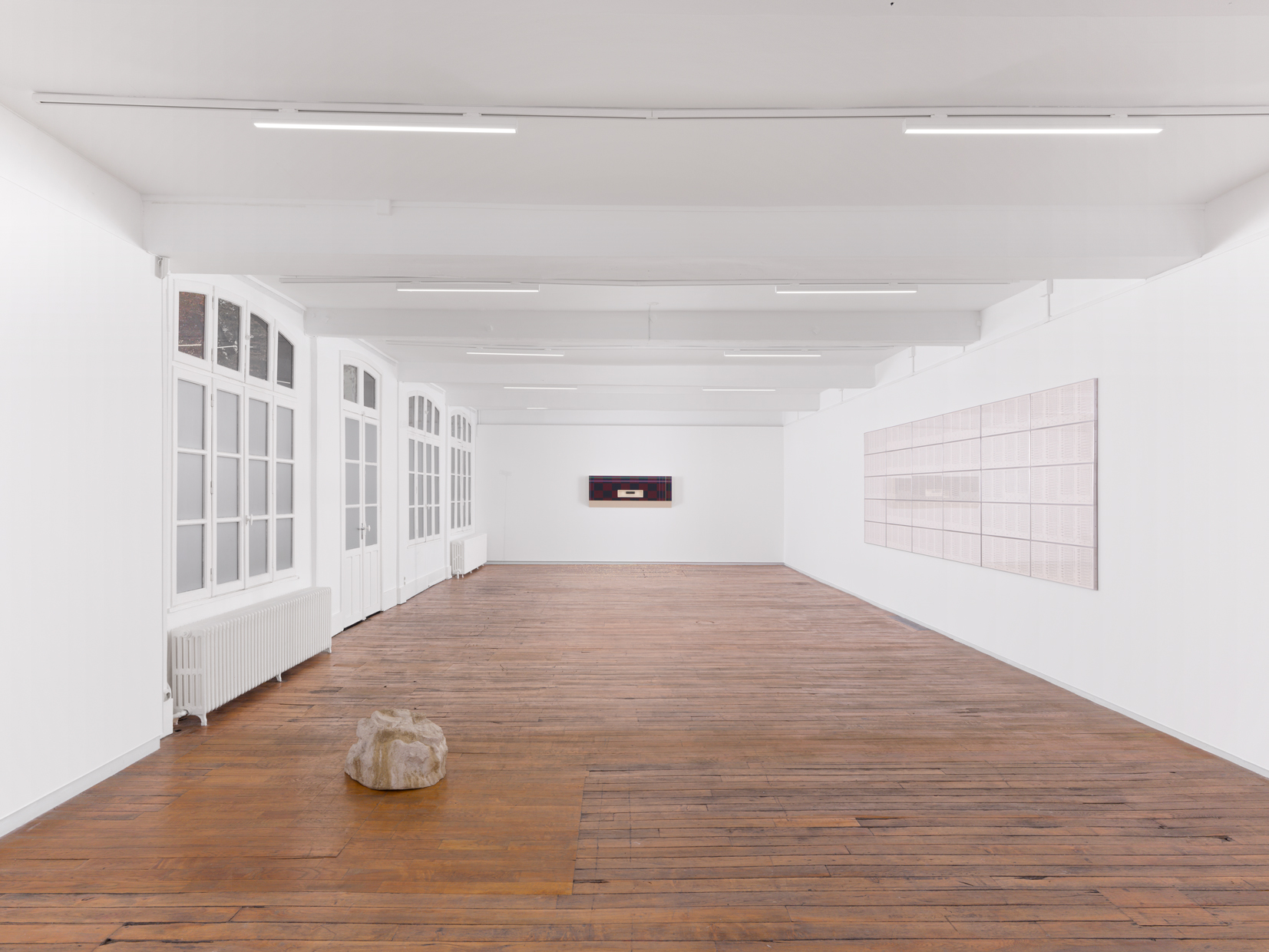
Although the works that make up the exhibition Ask the Void do not directly refer to divinatory practices, they nevertheless inhabit a similar temporality. This oracular time, described by the musicologist and I Ching practitioner Phil Ford in his essay “Diviner’s Time,” is one of repetition, mirror effects, and meaningful coincidence. To picture it, one need only listen to an opera, where, “as in other works of art, signs throng like shoals of fish, coming together in tight and patterned arrays that would be astonishing if we encountered them in our everyday lives.” Yet, the author tells us, “in divination, we do so encounter them.”
The market realism that largely defines the mindset of the art world tends to make us forget that the exhibition, too, is a temporal medium. But unlike opera, cinema, or theatre, where one attends a performance or screening, an exhibition is more like a zone that one passes through.
Since the most recent pandemic, timed-entry tickets have become widespread across museums. But make no mistake: it is the exhibition that adds us to its schedule, not the other way around. Our perception of an exhibition is therefore necessarily fragmentary, despite all the scholarly integrity that may have gone into its making.
If I were to place a work as an epigraph to Ask the Void, it would be Marcel Duchamp’s With Hidden Noise (À bruit secret), first made in 1916. My most recent encounter with With Hidden Noise—or at least with one of its replicas—took place during a trip to Los Angeles, in the gallery devoted to early twentieth-century European avant-gardes within LACMA’s permanent collection. There, this simple ball of twine compressed between two brass plates, concealing an unknown object chosen by the collector Walter Arensberg, presided among the Picassos, Arps, and Giacomettis, overlooked by the names of donors adorning the walls. Properly mounted on a plinth and enclosed beneath a Plexiglas cover, the piece made me think, for a brief moment, of a Petri dish containing a virus that had to be kept under strict confinement.
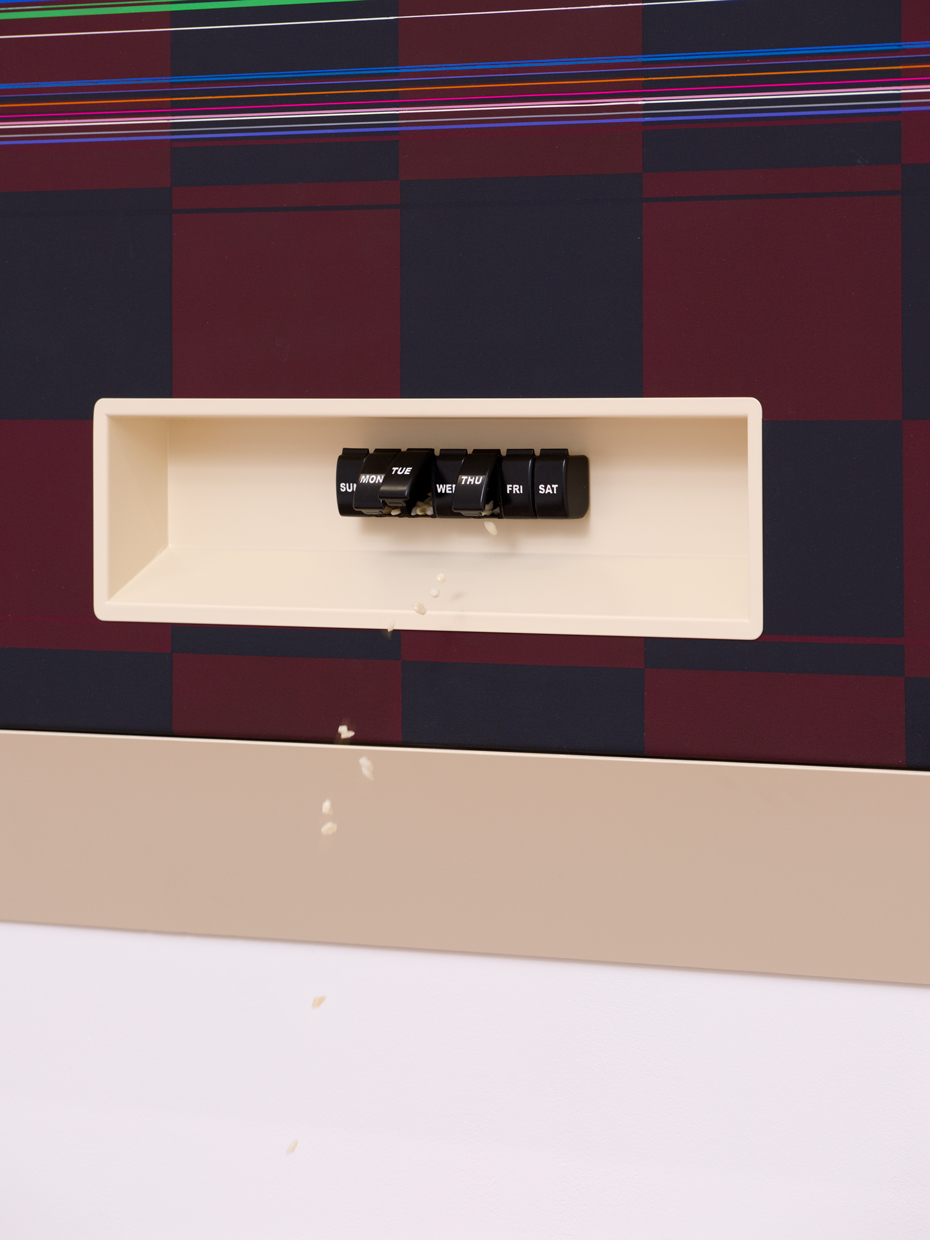
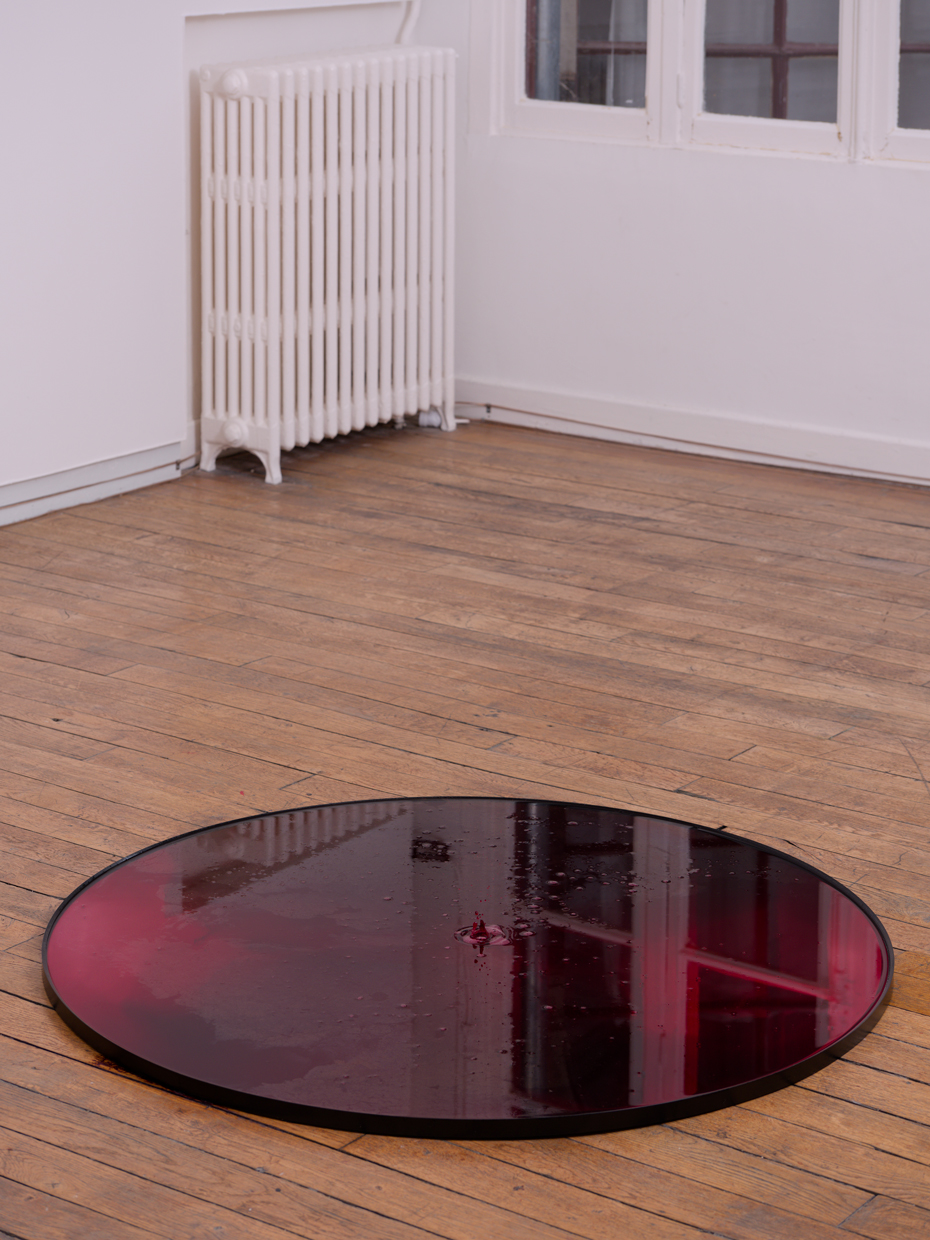
The works that make up Ask the Void likewise contain a hidden dimension, a shadowy area that spreads beyond administrative time like ink in water. At times austere, even mute, some of them seem to play with their backs to the audience, at odds with the here and now. Others engage more explicitly with the weird. I have tried to compose the exhibition like a piece of music, in which the works call out to one another across different periods and established lineages, each heralding the others like so many signs asking to be interpreted.
Later in his essay, Phil Ford reverses the analogy between divinatory time and operatic time: “Indeed, it might be that this temporality is musical time, that divination makes of human life a kind of music.”
One might readily extend this idea to visual art, provided one accepts the notion—somewhat heretical in our time—that it can enable those who encounter it to create meaning.
François Lancien Guilberteau